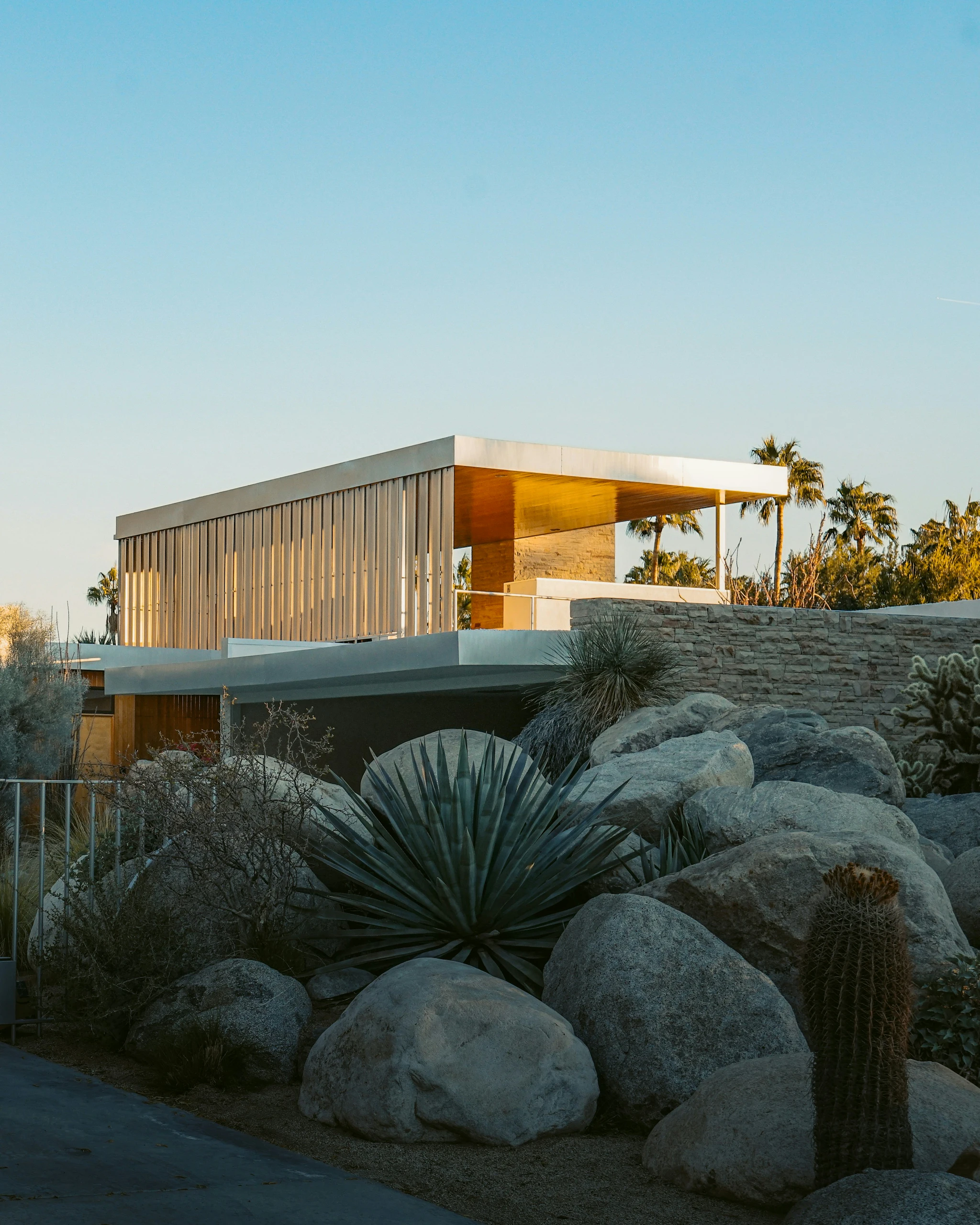
In Palm Springs, architecture is part of the landscape. Low rooflines stretch toward the San Jacinto Mountains. Walls of glass dissolve the boundary between indoors and out. Pools, patios, breeze blocks, and deep overhangs reflect a style of living shaped by sunshine, heat, and the desert itself.
This is the home of Desert Modernism, a distinctive interpretation of mid-century modern design that flourished in Palm Springs in the mid-20th century. Architects including Richard Neutra, Albert Frey, E. Stewart Williams, Donald Wexler, and William Krisel helped turn the city into a remarkable collection of modernist homes, civic buildings, hotels, and commercial spaces.
For visitors, discovering that legacy offers a different way to experience Palm Springs. You can see it in celebrated private residences, spend an afternoon exploring architecture and design, or notice how naturally the city's most memorable buildings seem to belong to their surroundings.
The Icons of Palm Springs Modernism
Some of Palm Springs' most important buildings are private residences, which makes their influence all the more intriguing. Designed as places to live, entertain, and escape, they ultimately helped define the visual identity of an entire city.
Kaufmann Desert House
Designed by Richard Neutra in 1946 for department-store owner Edgar J. Kaufmann, the Kaufmann Desert House remains one of Palm Springs' most internationally recognized residences. Kaufmann had previously commissioned Frank Lloyd Wright to design Fallingwater in Pennsylvania. In Palm Springs, Neutra responded to an entirely different landscape with a low, geometric residence designed around light, views, and indoor-outdoor living.
The home is privately owned, so experiencing it usually means understanding its place within a broader architectural tour rather than expecting to step inside. Its setting and history nevertheless make it an essential reference point for understanding how modernist architects approached the desert.
Frey House II
Albert Frey's own residence offers perhaps the purest expression of architecture adapting to the landscape rather than competing with it.
Completed in the 1960s on the mountainside above Palm Springs, Frey House II incorporates the surrounding terrain directly into its design. A large natural boulder passes through the house itself, while expansive windows frame the valley below. Frey lived there for decades before leaving the residence to the Palm Springs Art Museum.
Even with limited access to the house, Frey's influence is visible elsewhere throughout Palm Springs.
The Palm Springs Visitor Center
One of the easiest places to see Frey's work is also one of the first landmarks many visitors encounter.
The Palm Springs Visitor Center began as the Tramway Gas Station, designed by Albert Frey and Robson Chambers and constructed in the 1960s. Its dramatic, soaring roof was intended to catch the attention of motorists approaching Palm Springs and remains one of the city's most recognizable modernist structures.
It is an appropriate introduction to a city where even a former gas station can become an architectural landmark.
Frank Sinatra's Twin Palms Estate
Palm Springs modernism also tells the story of Hollywood's relationship with the desert.
Frank Sinatra commissioned E. Stewart Williams to design his Palm Springs residence in 1947.
Sinatra originally envisioned a Georgian-style home, but Williams persuaded him toward a design better suited to the desert. The resulting Twin Palms estate paired long horizontal lines and expanses of glass with the relaxed indoor-outdoor lifestyle that would become synonymous with Palm Springs.
Its famous piano-shaped swimming pool adds a touch of Sinatra mythology, but the house is significant beyond its celebrity connection. It helped establish the relationship between modern architecture, Hollywood glamour, and desert leisure that still shapes the city's identity today.
Experience Palm Springs Through Its Architecture
You do not need an architecture degree to appreciate Desert Modernism. Part of its appeal is how readily the ideas reveal themselves once you know what to notice.
Look for long horizontal profiles that echo the desert floor. Notice the deep overhangs creating shade, the expanses of glass framing mountain views, and the transitions from interior rooms to pools, courtyards, and terraces. These were aesthetic decisions, but they were also practical responses to the desert climate.
The most rewarding way to experience Palm Springs architecture is with an expert who can bring the city's design history into focus. Private guided tours can be tailored around particular architects, neighborhoods, or periods, with opportunities to go beyond the streetscape and step inside select residences when access is available. For design enthusiasts, that closer perspective reveals details that are easy to miss from the curb, from original materials and furnishings to the relationship between the interiors, gardens, pools, and surrounding desert.
Visit During Modernism Week
For architecture and design enthusiasts, February offers one of the most immersive ways to experience Palm Springs. Modernism Week turns the city and surrounding Coachella Valley into a celebration of mid-century modern architecture, interiors, landscape design, art, and vintage culture.
The annual festival extends well beyond exhibitions and lectures. Its extensive program typically includes architectural home tours, neighborhood tours, designer showcases, talks, parties, and special events, with many experiences offering access to spaces visitors would not ordinarily see. A smaller Modernism Week event also takes place each October, offering another seasonal opportunity to explore the region's design legacy.
Step Inside Palm Springs Modernism
The home tours are among the festival's biggest draws. While you can appreciate Palm Springs' architecture from the street, Modernism Week offers opportunities to experience select private residences from the inside.
Participating homes and neighborhoods change each year, making each festival different. Tours may focus on a particular architect, architectural style, neighborhood, or collection of residences. Inside, visitors can see how the principles visible from the street continue throughout the property, from original floor plans and furnishings to courtyards, pools, gardens, and carefully framed mountain views.
For someone with a serious interest in architecture or interiors, that access can completely change the experience. Rather than simply recognizing a famous roofline or façade, you begin to understand how these homes were designed to be lived in.
Go Deeper Into the Design Story
Modernism Week also provides context for what you see throughout Palm Springs. Talks, panel discussions, exhibitions, films, and other programs explore the architects and designers behind the movement, along with subjects ranging from landscape architecture and preservation to interiors, furniture, photography, and contemporary interpretations of modernism.
That makes it possible to shape a visit around a particular interest. An architecture enthusiast might build several days around the work of Albert Frey or other influential desert architects. A collector might focus more heavily on interiors, decorative arts, and vintage design. Others may prefer a broader itinerary that combines significant homes with exhibitions, neighborhood tours, dining, and time simply enjoying the city's design-driven atmosphere.
Plan the Stay Around the Festival
Modernism Week rewards planning. Its most sought-after home tours and special programs have limited capacity, and the February event draws design enthusiasts from around the world.
Rather than arriving and deciding what to see afterward, consider the festival calendar part of the trip itself. Select the homes, architects, talks, and design experiences that interest you most, then build dining, shopping, and time at the villa around them.
For Maimon guests, the concierge team can help create a design-focused itinerary around the week's programming, coordinate reservations and transportation, and identify private or more intimate architecture experiences that may complement the official festival schedule, subject to availability.
The result is a different kind of Palm Springs stay: one where the city's architecture is not simply the backdrop, but the reason for being there.
Explore the Architecture and Design Center
Palm Springs' relationship with design extends beyond its celebrated homes. For a deeper understanding of the architects, ideas, and objects that shaped the city's visual identity, spend time at the Palm Springs Art Museum Architecture and Design Center at the Edwards Harris Pavilion.
The setting is fitting. The center occupies a former Santa Fe Federal Savings and Loan building designed by E. Stewart Williams in 1961. After an extensive restoration, the glass-and-steel structure reopened as the museum's Architecture and Design Center in 2014. Its clean geometry, open interior, and floor-to-ceiling windows make the building itself part of the visit, particularly with the San Jacinto Mountains rising beyond the glass.
Williams helped define modern Palm Springs, making this more than a museum housed in an attractive mid-century building. It is an opportunity to experience his work from within. The transparency, natural light, and relationship between the structure and its surroundings reflect many of the same principles visitors encounter in residences throughout the city.
Discover the People Behind the Design
Exhibitions at the center explore architecture and design both within Palm Springs and in a broader context, creating a useful bridge between the city's celebrated buildings and the ideas behind them. Depending on the exhibition calendar, a visit might touch on architecture, furniture, decorative arts, photography, landscape, or other elements of modern and contemporary design.
The museum's Architecture and Design Collection adds another layer of depth. Its holdings include drawings, photographs, models, manuscripts, and other materials connected to influential figures in desert architecture and design, with archival collections related to Albert Frey, E. Stewart Williams, Arthur Elrod, Hugh Kaptur, and others.
For visitors who have already spent time exploring Palm Springs' neighborhoods, that context can make familiar names and buildings feel considerably more meaningful. A house that initially stands out for its dramatic roofline or mountain setting becomes part of a larger story about architects experimenting with climate, materials, landscape, and a distinctly Californian way of living.
Make It Part of a Design-Focused Day
The Architecture and Design Center works particularly well as part of a thoughtfully planned architecture itinerary rather than as an isolated museum stop. Pair a visit with a private architectural tour to see how the principles explored inside the museum appear in homes and neighborhoods across Palm Springs, then continue into the Uptown Design District to see how the city's modernist aesthetic carries into furniture, art, and contemporary design.
For guests with a particular interest in architecture, interiors, or collecting, The Maimon Group can help shape the day around those interests, coordinating a private guide, current exhibitions, design destinations, dining, and transportation into one seamless itinerary.
It is an opportunity to move beyond admiring Palm Springs Modernism and begin understanding the people and ideas that made the city look the way it does.
Browse the Uptown Design District
Mid-century design's influence continues beyond Palm Springs' celebrated homes. Along North Palm Canyon Drive, the Uptown Design District brings the city's architectural identity to life in its galleries, showrooms, vintage shops, and boutiques.
This is one of the best places to see how Palm Springs Modernism evolved from an architectural movement into an enduring design language. Original mid-century furniture and decorative objects share space with contemporary pieces inspired by the same clean lines, natural materials, bold forms, and indoor-outdoor sensibility found throughout the city's most recognizable homes.
Shop Palm Springs' Design Legacy
For collectors, the district offers the opportunity to look beyond mid-century-inspired décor and seek out authentic vintage pieces. Long-established destinations such as Modern Way specialize in 20th-century furniture and design, while The Shops at 1345 bring multiple independent dealers and boutiques together inside a distinctive mid-century building designed by E. Stewart Williams.
The experience can extend well beyond furniture. Depending on where you stop, you may encounter vintage lighting, ceramics, glassware, sculpture, artwork, textiles, fashion, and smaller decorative objects that reflect different eras of Palm Springs style.
Part of the pleasure is the discovery. A sculptural chair, vintage barware, or statement lamp can reveal as much about the optimism and informality of mid-century desert living as one of the city's famous residences.
Look Beyond the Objects
The setting deserves attention, too. Several businesses occupy architecturally notable buildings, making a walk through Uptown an extension of the architecture experience rather than simply an afternoon of shopping.
The Shops at 1345 is a particularly fitting example. Originally designed as a commercial building by E. Stewart Williams, the structure brings the same modernist principles found in his residential and institutional work into a retail setting. Today, browsing inside offers the unusual opportunity to shop for design while experiencing an original piece of Palm Springs design history.
That connection between architecture and everyday life is part of what makes the district distinctive. Modernism here is not preserved solely behind museum doors or admired from the curb. It remains part of how Palm Springs shops, furnishes its homes, and expresses its identity.
Explore With a Collector's Eye
A more considered approach can make Uptown particularly rewarding for guests searching for something specific. A design-focused itinerary might center on original mid-century furniture, California ceramics, vintage fashion, or pieces associated with particular designers and periods.
The Maimon Group can help tailor the experience around a guest's interests, incorporating design destinations into a broader day of private architecture tours, galleries, dining, and other stops throughout Palm Springs. For guests actively collecting, concierge support can also help coordinate the practical details around purchases when available.
Even without a particular acquisition in mind, Uptown offers something valuable: the chance to see how the design principles that shaped Palm Springs nearly a century ago still influence how the city looks and lives today.
The Maimon Experience
In Palm Springs, great design does not have to be something you simply admire. It can shape the entire stay.
The Maimon Group can curate a Palm Springs experience around the architecture and design that interest you most, from private guided tours and opportunities to step inside select residences to museum exhibitions, vintage and design shopping, and seasonal Modernism Week programming. Your itinerary can be tailored around a particular architect, neighborhood, collection, or period, with dining, transportation, and time to explore thoughtfully built into the day.
Where you stay can be part of that experience, too. A design-forward private villa naturally continues Palm Springs Modernism, with open interiors, mountain views, outdoor living spaces, and a private pool that offers a place to slow down between days spent exploring the city.
Whether you are coming for Modernism Week, searching for a particular piece for your collection, or simply want to experience Palm Springs through the design that made it iconic, our concierge team can help bring the details together.
Discover Palm Springs with The Maimon Group and let us create a stay inspired by the city's extraordinary design legacy.